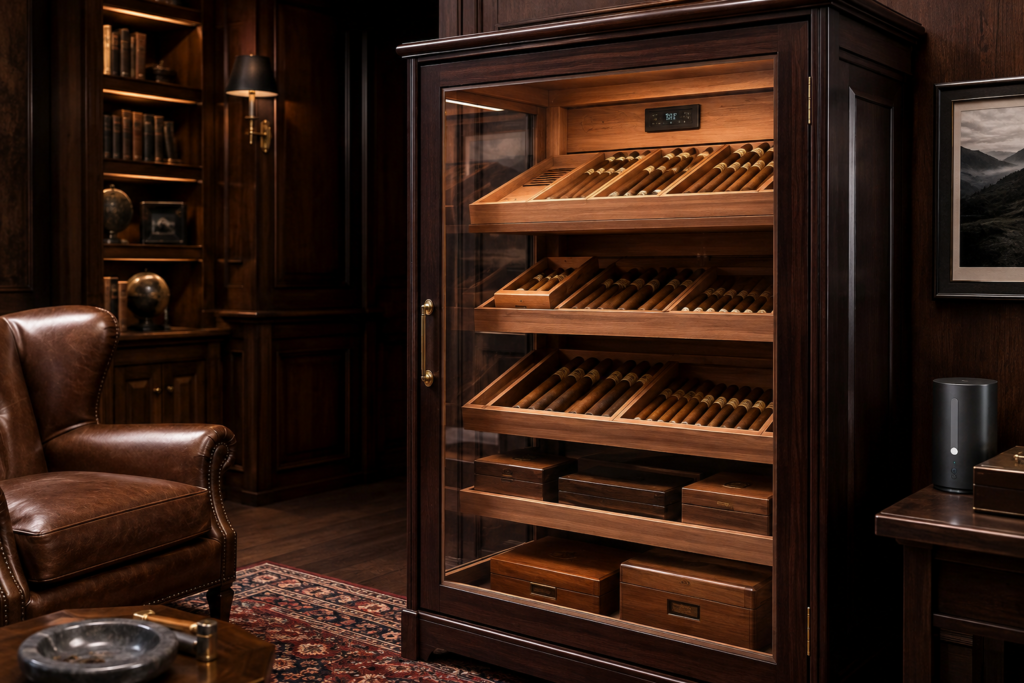
Australia’s premium cigar storage market is evolving as collectors seek better control over ageing conditions, presentation and capacity. Once mainly associated with specialist retailers and private clubs, the humidor cabinet is increasingly being considered by enthusiasts who have outgrown smaller desktop units and require a more stable environment for valuable collections.
Alongside larger storage formats, boveda humidity packs have gained attention as a straightforward option for maintaining controlled conditions without complicated installation. Their growing use reflects a broader shift towards storage systems that reduce manual adjustment while providing greater consistency across changing Australian seasons.
Demand Shifts Towards Higher-Capacity Storage
Desktop humidors remain suitable for modest collections, but they can become restrictive as buyers acquire boxes, limited releases and cigars intended for long-term ageing. Cabinets offer more room for organisation, allowing products to be separated by brand, format, strength or intended ageing period.
This capacity is particularly relevant for collectors purchasing sealed boxes rather than individual cigars. Keeping boxes intact can protect presentation, simplify inventory management and preserve provenance. Adjustable shelves and drawers also help owners organise their stock without excessive handling.
Retailers are responding by expanding the range of freestanding and furniture-style models available online. Product listings increasingly include internal dimensions, recommended capacity, shelf configuration and climate-control specifications so customers can compare storage options before purchasing.
Climate Control Becomes a Purchasing Priority
Australia’s varied climate presents practical storage challenges. High summer temperatures, air conditioning, heating and regional differences can all affect conditions inside a storage unit. As a result, buyers are paying closer attention to sealing quality, internal airflow and monitoring equipment.
Humidity is only one part of the storage equation. Excessive heat can accelerate deterioration and increase the risk of tobacco beetle activity, while low temperatures combined with unstable moisture levels may disrupt ageing. Reliable digital hygrometers and thermometers are therefore becoming standard components rather than optional accessories.
A well-designed cabinet should distribute conditioned air throughout its interior. Poor circulation can create localised areas that are either too dry or too moist, particularly when shelves are densely packed. Collectors are consequently looking for models with ventilation space, internal fans or layouts designed to promote even airflow.
For electrically managed systems, the quality and positioning of the cigar humidifier can influence how effectively moisture reaches every section. Buyers should assess whether the equipment is appropriate for the cabinet’s internal volume and whether replacement parts or servicing are readily available.
Materials Remain Central to Performance
Spanish cedar continues to be widely used for interior linings, shelves and drawers because it can help buffer changes in moisture while supporting the traditional ageing environment expected by cigar collectors. It is also valued for its aroma and resistance to certain pests.
The timber is closely associated with the broader history and manufacture of the cigar, making that phrase suitable for an authoritative contextual reference. However, buyers still need to examine construction quality, as the presence of cedar alone does not guarantee effective storage.
Door alignment, hinges, seals and glass panels can all affect performance. Glass-fronted cabinets provide strong visual appeal and allow owners to inspect their collection without opening the door, although they should be positioned away from direct sunlight and strong indoor lighting. Solid-door models may offer greater protection from light but provide less immediate visibility.
Smart Monitoring Enters the Premium Segment
Connected sensors are becoming more prominent in premium storage equipment. These devices can send temperature and humidity readings to a mobile application, allowing collectors to monitor conditions without repeatedly opening the cabinet.
Alerts may also warn users when readings move outside a selected range. This can be useful during heatwaves, extended travel or equipment failure, particularly for collections containing rare or high-value cigars. Some systems retain historical data, helping owners identify recurring fluctuations and assess whether the storage location is suitable.
Despite the convenience of remote monitoring, sensor accuracy remains important. Buyers should check calibration options and consider comparing digital readings with a separate trusted device. Technology can improve oversight, but it cannot compensate for an unsuitable room, damaged seal or incorrectly sized climate-control system.
Online Retail Information Faces Greater Scrutiny
As more storage equipment is purchased online, shoppers require detailed and accurate product information. Capacity estimates can vary significantly depending on cigar size, shelf position and whether products are stored individually or in boxes. Retailers that explain how their estimates are calculated give customers a clearer basis for comparison.
Warranty coverage, delivery arrangements and after-sales support are also becoming significant purchase considerations. Large cabinets may require careful handling, indoor placement or assembly, while electronic components can need maintenance over time. Clear guidance reduces the risk of customers selecting equipment that is too large, too small or unsuitable for their intended location.
The market’s continued development indicates that premium cigar storage is becoming more specialised. Buyers are no longer assessing appearance and stated capacity alone. Construction, airflow, monitoring, climate compatibility and serviceability are now central to purchasing decisions, reflecting a more informed approach to protecting collections over the long term.